As organisations place increasing emphasis on digital sovereignty, technology choices are becoming strategic business decisions. Cloud procurement, AI adoption, data governance and cybersecurity now directly influence market access, customer trust and organisational resilience.
This executive course helps participants understand where critical dependencies exist, how sovereignty requirements are shaping markets, and how to make better technology and procurement decisions. Delivered jointly by the Institute of Computer Science at the University of St.Gallen and the European DIGITAL SME Alliance, the programme combines policy insights, technology expertise and practical business perspectives to help organisations turn sovereignty into a strategic advantage.
| Duration | Two consecutive half-days in person: an afternoon session followed by a morning session, including networking moments. |
| Location | Brussels, Belgium |
| Language | English |
| Fee | CHF 890 standard fee, CHF 780 reduced fee for HSG alumni and DIGITAL SME members |
| Target audience | CTOs, CISOs, enterprise architects, procurement & public-sector professionals, policy advisors, consultants, business development teams, technology solution providers |
| Attendance | In person. Limited slots. First-come, first-served. |
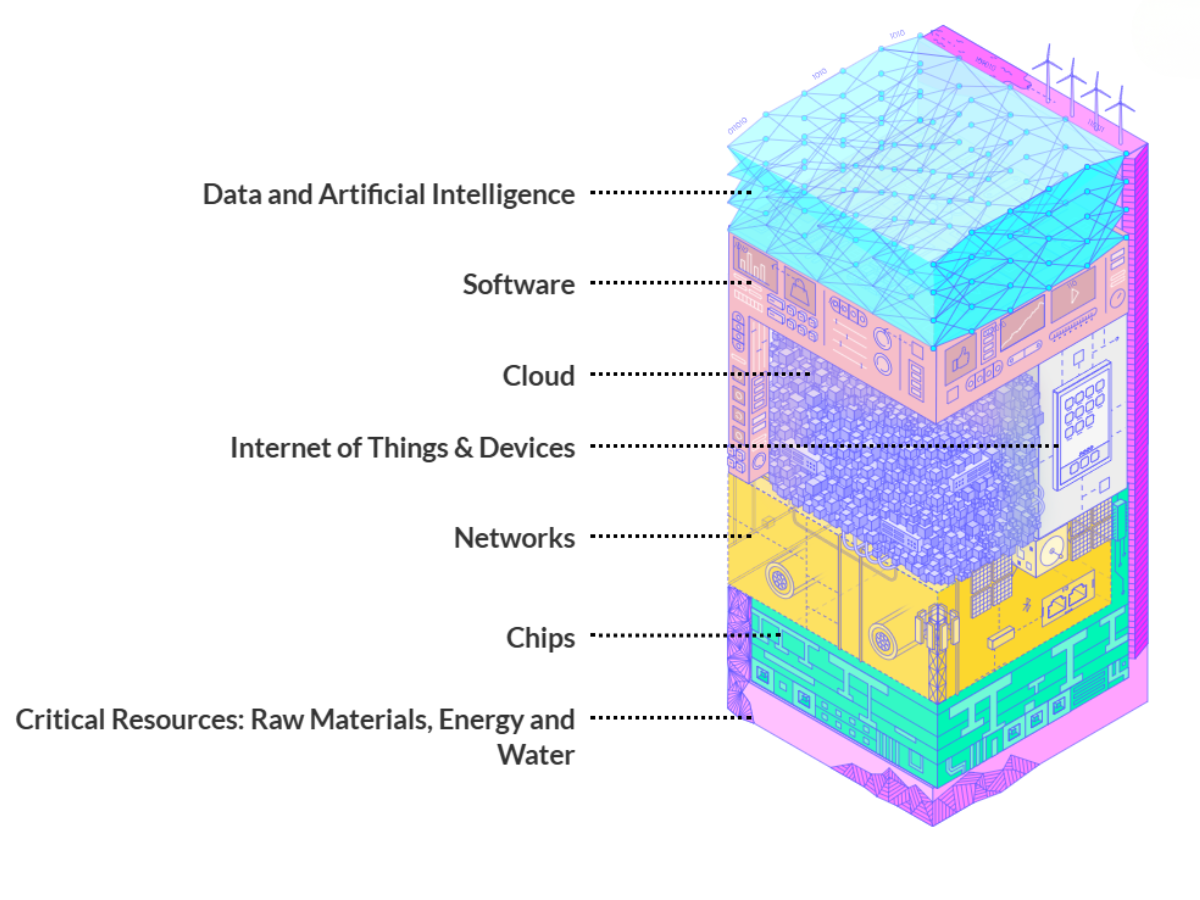
Cloud, AI, data, cybersecurity, and connectivity are no longer isolated technology domains. Decisions made in one layer can create dependencies, opportunities, and risks across the entire tech stack.
This course helps participants understand these interconnections and develop a structured approach to evaluating technology choices through the lens of resilience, competitiveness, and sovereignty.
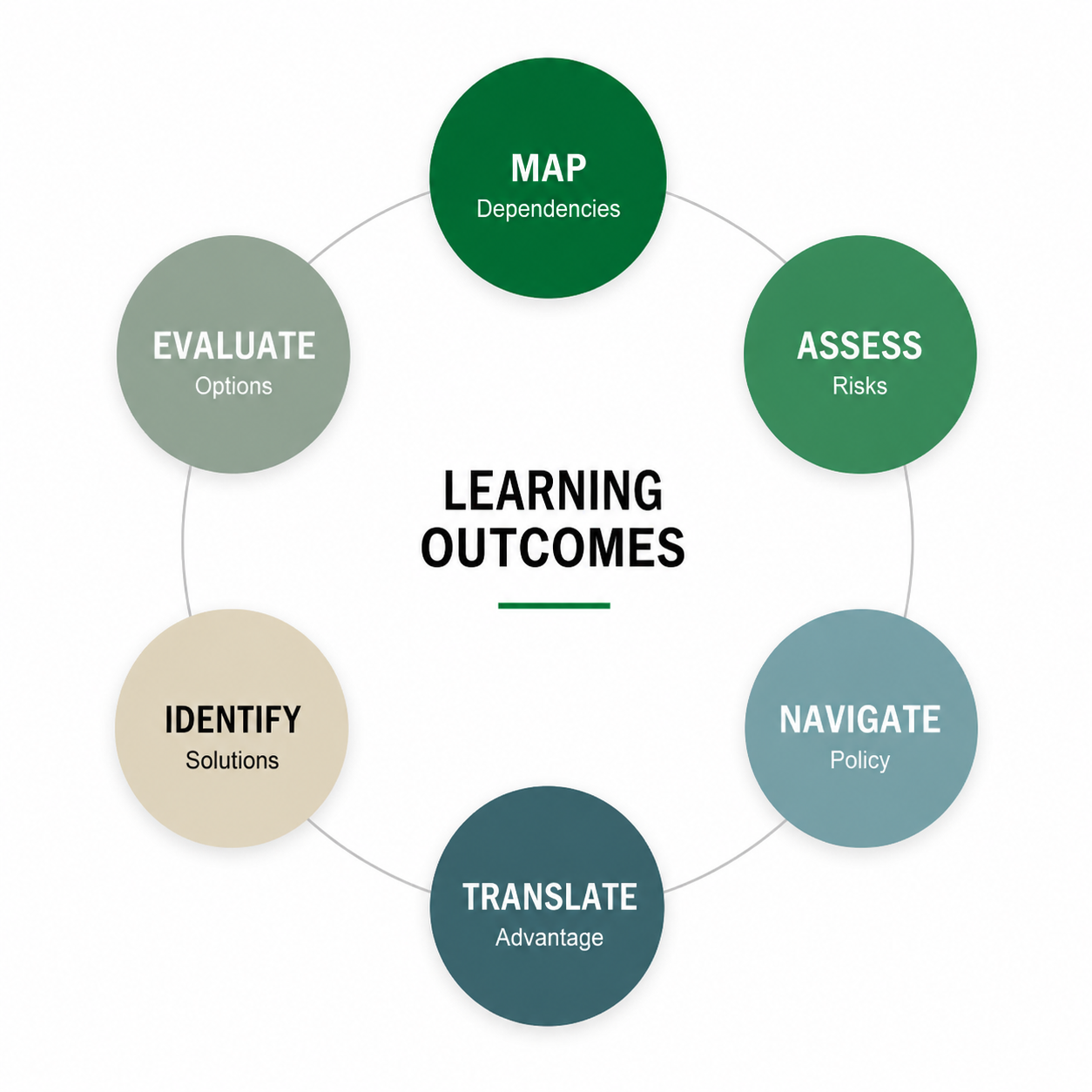
By the end of the course, participants will be able to:
Navigate the EU digital sovereignty landscape, including key regulations and policy initiatives.
Evaluate strategic options for cloud, AI, data management, chips, and digital supply chains.
Identify European sovereign technology solutions and apply sovereignty criteria in procurement and vendor selection.
Translate sovereignty into competitive advantage, market positioning, and trust-based partnerships.
The programme is structured around five linked sessions delivered across two consecutive half-days. The course moves from why sovereignty matters, to how to assess risk, to how to make concrete technology, procurement, and market decisions.
The first three modules are done in an afternoon session with coffee breaks and a networking apéro, followed by a morning session with the remaining two modules that ends with a networking lunch.
DIGITAL REGULATION FRAMEWORK
Data: GDPR,Data Act, Data Governance Act
Products: Digital Markets Act, Digital Services Act
AI & Cloud: Artificial Intelligence Act, AI Continent Plan, Cloud and AI development Act
DIGITAL SOVEREIGNTY RISKS
Extraterritorial Access: Cloud Act vs GDPR
Vendor Lock-In: VMWare and alike
Dependence: CrowdStrike and alike
CEO, Board Advisor, Entrepreneur, Expert in Digital Transformation, Lecturer, Public Speaker, Author.
Secretary General (CEO), European DIGITAL SME Alliance, GA Vice Chair, ETSI.
This tech sovereignty course is for leaders in the private and public sectors. Specifically, it suits:
In short, you leave with a clear roadmap. You build resilience, win trust-based contracts, and cut lock-in costs.
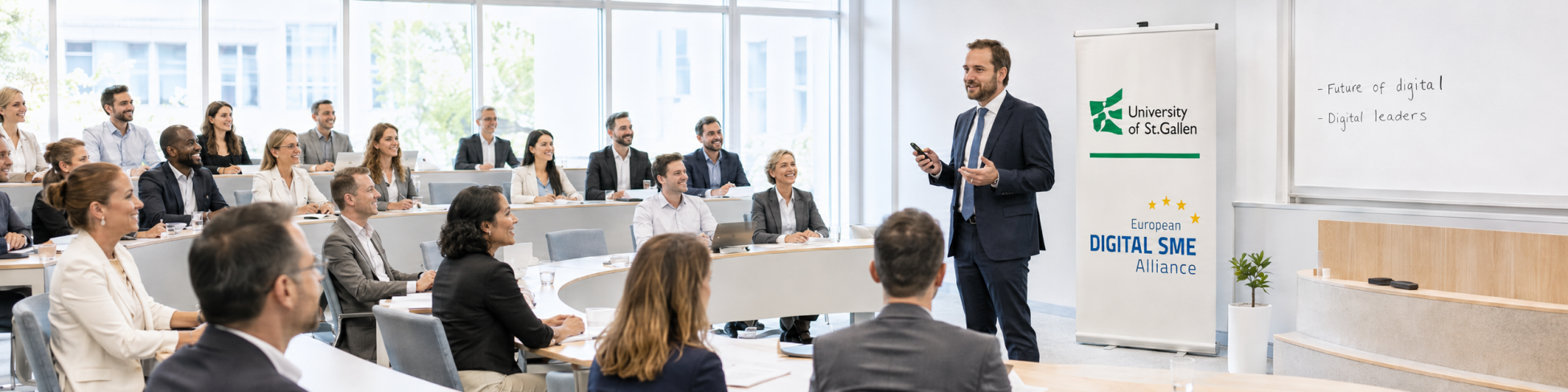
The programme includes executive lectures, structured discussions, case-based analysis, and peer exchange. Participants move from the strategic foundations of digital sovereignty to concrete decisions on regulation, cloud, AI, data, supply chains, procurement, and European technology providers. The two half-days also include a networking apéro and networking lunch with peers from the European digital ecosystem. Participants receive a certificate of participation upon completion.

The Institute of Computer Science (ICS-HSG) at the University of St.Gallen, one of the leading business schools in Europe, is a research institute specialized in computer science and dedicated to scientific excellence to foster economic growth and societal well-being, associated with the School of Computer Science (SCS). Our fields of expertise range from artificial intelligence, cyber security, data science, communication systems, human-computer interaction, programming languages, and software engineering.
The European DIGITAL SME Alliance is the largest network of ICT SMEs in Europe. It represents over 45,000 digital SMEs. Moreover, it brings together 30 national and regional SME associations. These come from EU member states and nearby countries. Together, they put digital SMEs at the centre of the EU agenda. In addition, DIGITAL SME shares know-how and best practices in ICT. It also represents ICT SMEs at the EU institutions. Finally, the Alliance is a member of SBS, SMEUnited, ECSO, AIOTI, EU Gateway, European Entrepreneurs CEA-PME, the European AI Alliance, INATBA, the European Internet Forum, GeSI, and the Coalition for App Fairness.